

DataSagar | Last Updated 8/27/2026 | Kathmandu, Nepal
Inside this article:The Data Behind Top Global Carbon Emissions, Interactive Carbon Emission Comparision Data Chart of Major Contributors with Nepal, Why Major Emitters Must Pay for Himalayan Cryosphere Collapse?, The Global Carbon Budget, Warfare Footprints, and the High-Altitude Destabilization of the Hindu - Kush Himalayan Region
Balancing my time at IllionSo and Kashi Garden keeps my day almost hectic, but whenever I manage to write here on DataSagar, it comes from a commitment to rigorous research and empirical analysis. Yet, no amount of analysis prepares you for the devastating reality of human lives torn apart.
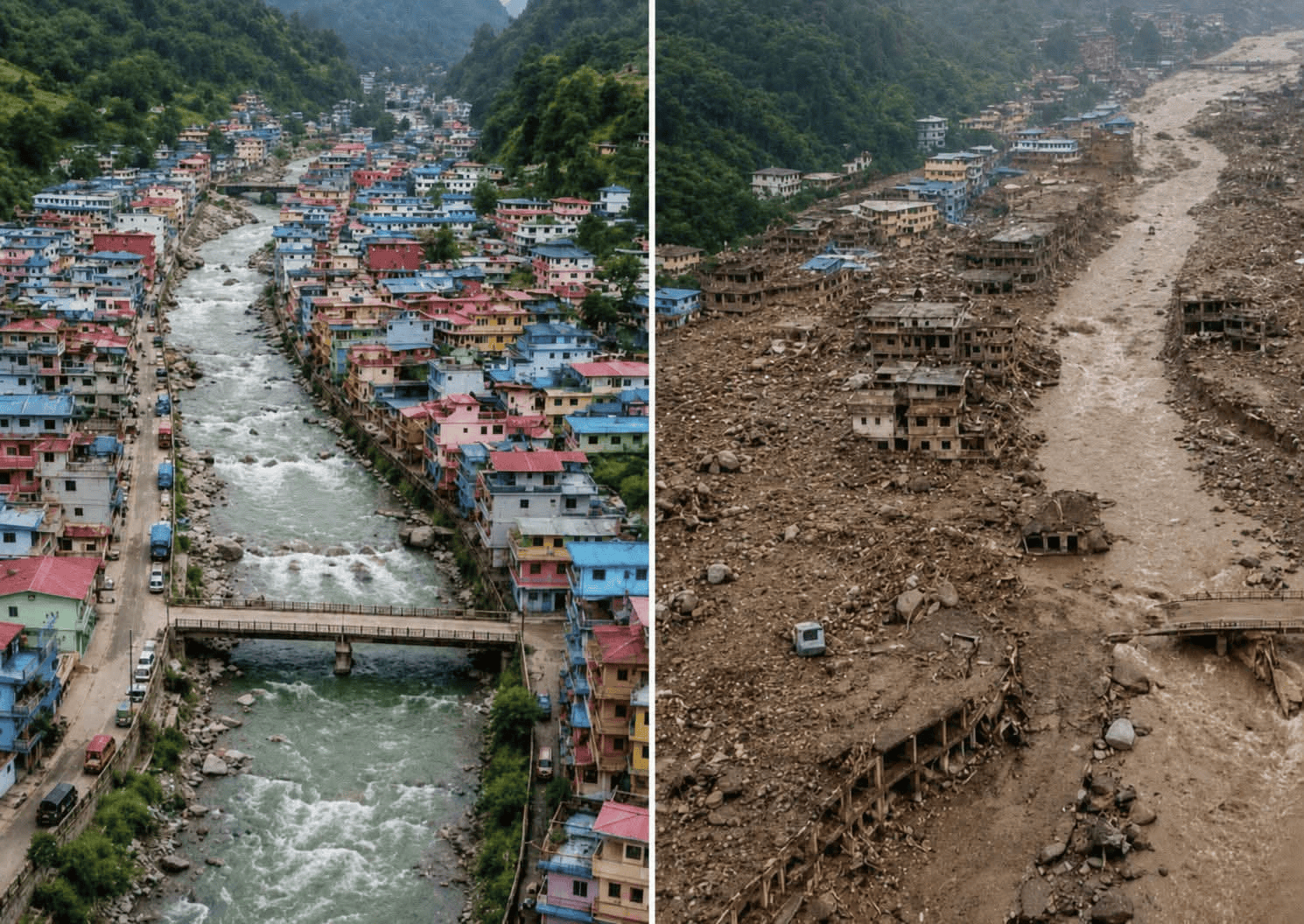
Small, peaceful mountain towns like Timure in Rasuwa were never built for such total destruction. People had lived quietly in these deep valleys for generations. Yet in just thirty terrifying minutes, a massive wave of ice, rocks, and thick black mud wiped away everything they had built.
Estimate of more than 2 Kharba NPR (over $1.5 billion USD) of Nepal's fragile development budget vanished in a heartbeat. Over 40 kilometers of paved highway were sliced clean off the cliffside, and more than eight dozen bridges and suspension crossings were swept away. Recovering that single corridor will take decades of debt and labor.
The hardest part isn’t the broken roads or buildings but the loss of human lives. People who woke up doing their morning chores in the cool mountain mist were swept away by the river. By the afternoon, rescue teams were finding them dead hundreds of kilometers away in Chitwan and the Terai.
As I continue following these Rasuwa Flash Flood Updates today, I find myself thinking again and again: Why are people who contribute almost nothing to global warming bearing the catastrophic cost with their lives and ancestral lands and everything?
Saying that, we must remain grounded in scientific reality. No single country is directly to blame for an individual rainstorm or rockfall. But the physics is clear: major industrial economies have destabilized the global climate system, and non-emitting mountain nations like Nepal are paying the price. We are burning through our development budget just to clear debris and rebuild roads—often taking foreign loans from the same wealthy polluters to fix the damage they helped create.
The Staggering Global Emissions Ledger
To put Nepal’s position in perspective, look at the cold numbers from the European Commission’s EDGAR Database and the Global Carbon Budget / Our World in Data series. In 2024, human industry produced approximately 39.63 billion tonnes (39.63 Gt) of fossil CO₂:
| Rank | Country / Territory | 2024 Fossil CO₂ | Global Share (%) | Relative to Nepal |
|---|---|---|---|---|
| 1 | China | 13,124.7 Mt (13.12 Gt) | 33.12% | ~826× |
| 2 | United States | 4,632.0 Mt (4.63 Gt) | 11.69% | ~291× |
| 3 | India | 3,154.0 Mt (3.15 Gt) | 7.96% | ~198× |
| 4 | Russia | 2,009.0 Mt (2.01 Gt) | 5.07% | ~126× |
| 5 | Japan | 972.0 Mt (0.97 Gt) | 2.45% | ~61× |
| 6 | Iran | 829.0 Mt (0.83 Gt) | 2.09% | ~52× |
| 7 | Indonesia | 812.0 Mt (0.81 Gt) | 2.05% | ~51× |
| 8 | Saudi Arabia | 653.0 Mt (0.65 Gt) | 1.65% | ~41× |
| 9 | South Korea | 588.0 Mt (0.59 Gt) | 1.48% | ~37× |
| 10 | Germany | 580.0 Mt (0.58 Gt) | 1.46% | ~36× |
| — | Nepal | 15.89 Mt (0.016 Gt) | 0.04% | 1× (Baseline) |
Top Global Emitters vs. Nepal
Select any major emitter to see how fast its economy burns through Nepal's entire annual CO₂ budget.


Third Pole Country • High Vulnerability
2024 Fossil CO₂ Emissions by Continent (Billion Tonnes / Gt)
Source: Global Carbon Budget / Our World in Data
Ever Thought of Contribution of War and Military Emissions ?
There is another critical driver of global warming that politicians rarely talk about: the global military-industrial footprint. Under the UNFCCC frameworks, reporting military greenhouse gas emissions is largely voluntary. Countries can exclude the emissions of their fighter jets, naval fleets, and artillery bombardment from their official reduction pledges.
Yet research by the Conflict and Environment Observatory (CEOBS), Scientists for Global Responsibility (SGR), and the Brown University Costs of War Project paints a grim picture:
5.5% of All Global Emissions
Worldwide militaries produce an estimated 5.5% of total annual greenhouse gases—more than the entire global commercial aviation sector combined.
The Post-9/11 War Machine
The Costs of War research calculated that the Iraq War (2003–2011) generated over 250 million tonnes of CO₂ equivalent, surpassing the entire annual output of nations like Sweden.
Modern War Zones
From Eastern Europe to the Middle East, artillery pounding cities, oil tank infernos, and rebuilding bombed structures generate millions of tonnes of CO₂ while remaining completely off climate ledgers.
Separating Atmospheric Reality from Mountain Chaos
Whenever a Himalayan tragedy occurs, public reaction swings wildly. On one side, people make oversimplified accusations ("Country X caused this disaster"); on the other, commentators shrug it off as "mountains doing mountain things." To understand the true climate footprint, I find it essential to look at causation through three distinct layers:
Global Emissions Drive Planetary Warming
Burning coal, oil, and gas has pushed atmospheric CO₂ beyond 420 ppm. The baseline thermal balance of our planet has changed, as confirmed in the exhaustive IPCC Sixth Assessment Report.
Warming Melts Glaciers and Unlocks Frozen Mountainsides
High elevations heat up at nearly double the global average rate. Subterranean permafrost—the frozen glue holding steep Himalayan rock faces together—is degrading rapidly, while supraglacial lakes expand, verified across studies in Nature and regular reports by ICIMOD.
What Pulls the Trigger on a Specific Day
The final collapse is often sparked by local events: a minor tremor, a sudden cloudburst, an unstable moraine wall, or a landslide dam burst. Climate change doesn't need to throw the rock; it weakens the entire cliffside so that even a minor nudge triggers a catastrophe.
You Call It a Climate Disaster? I Call It a Multi-Billion Dollar Crime Paid for by Our People
The Hindu Kush–Himalaya–Karakoram system is our planet’s "Third Pole," storing more snow and ice than anywhere outside the Arctic and Antarctic. As an analyst watching satellite passes over these ridges, the accelerating instability over the last few seasons is alarming:
South Lhonak Glacial Lake Outburst (Sikkim)
A sudden moraine rupture released millions of cubic meters of water, smashing the Chungthang Dam and killing over 170 people downstream, as reported by Reuters.
Unprecedented Late-Monsoon Torrent (Central Nepal)
A vicious deluge oversaturated mountain slopes around Kathmandu and Bagmati, causing widespread slope collapses and river swelling that killed dozens and wrecked highways.
Tibet–Nepal Border Supraglacial Drainage
A study on ScienceDirect detailed the sudden discharge of 3.84 million cubic meters of meltwater over 30 hours, scouring international transboundary riverbeds.
Catastrophic Serac Collapse on Broad Peak (Karakoram)
A massive hanging icefall swept through high camps, killing 10 mountaineers including iconic Nepali climber Nirmal "Nims" Purja, reported by Outside Magazine.
Convective Cloudburst Torrents (Kashmir)
Intense cloudbursts across narrow mountain gorges triggered violent debris flows, taking at least 28 lives and destroying bridges, as reported in The Guardian.
The crisis isn't just rushing water; it's also dry heat. A 2025 study in MDPI documented over 22,700 forest fire events in Nepal over ten years, with incidents nearly doubling during prolonged heatwaves. When hillsides burn, root networks die. When heavy rains arrive months later, those bare slopes collapse instantly into lethal debris flows.
I Think Climate Finance Is a Direct Debt Owed to Himalayan Nations, Not International Charity or Begging
For years, international delegations have patted Nepal on the back at climate summits, praising our community forests and our role as a regional "carbon sink." But planting trees in our hills cannot stop a glacier from collapsing when the rest of the planet dumps tens of billions of tonnes of fossil carbon into the atmosphere every twelve months.
Under the Paris Agreement, the principle of Common But Differentiated Responsibilities (CBDR) is not charity. It is an issue of basic fairness and liability:
- No More Loans for Climate Damage: Nepal cannot keep taking high-interest loans from multilateral banks to rebuild roads and bridges wiped out by climate-driven disasters. The Loss and Damage Fund must provide direct non-repayable grants.
- Direct Funding for Early Warning Systems: We need real-time, automated radar and river telemetry monitoring upstream glacial lakes across the border.
- Infrastructure Adaptation Subsidies: Major fossil economies must fund the extra engineering costs required to make our hydropower cascades and river highways resilient against high-energy sediment flows.
Planting the seeds of raising our voice from grassroots action to policy dialogue
To truly protect our vulnerable river basins and mountainous landscapes, Nepal must scale up proactive policy dialogues and embrace robust carbon credit initiatives that directly reward local stewardship. Moving beyond reactive relief means creating structured platforms where grassroots experiences inform national strategies and unlock climate finance.
Advocating for climate resilience cannot remain an academic exercise confined to spreadsheets. In my perception, practicing sustainable resource management and eco-conscious living like at Kashi Garden or working directly alongside local communities, bridging the gap between local action and international climate mechanisms is vital.
To foster dialogue on how vulnerable nations can navigate international climate mechanisms, the Community Leadership Nepal Foundation (CLNF) organized a symposium on ‘Climate Finance and its Significance in Nepal’ in Kathmandu on October 28, 2024. The event brought together national leaders, international development partners, and policy specialists to examine practical avenues for green growth, equitable loss and damage funding, and building resilient infrastructure across our river basins.
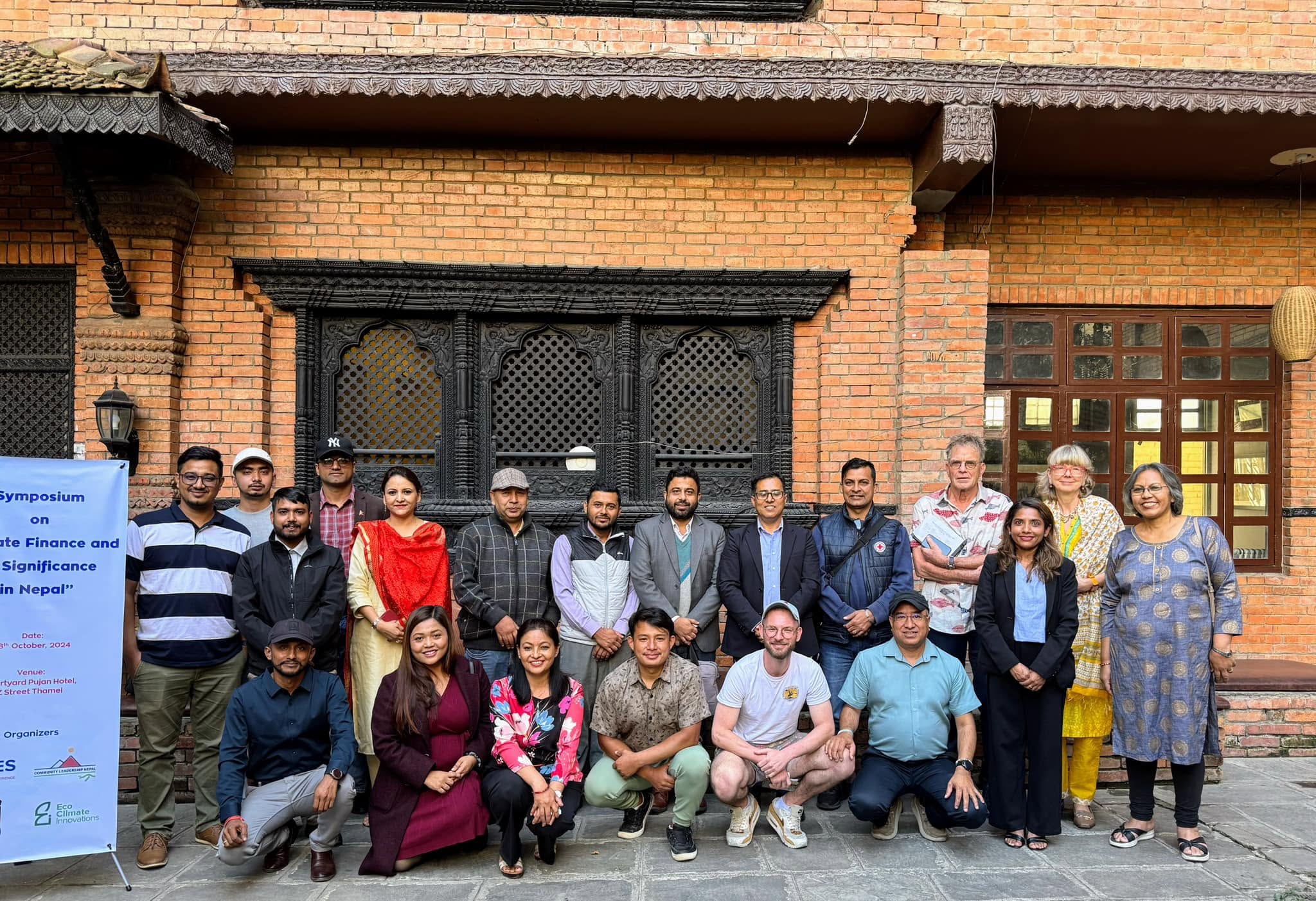
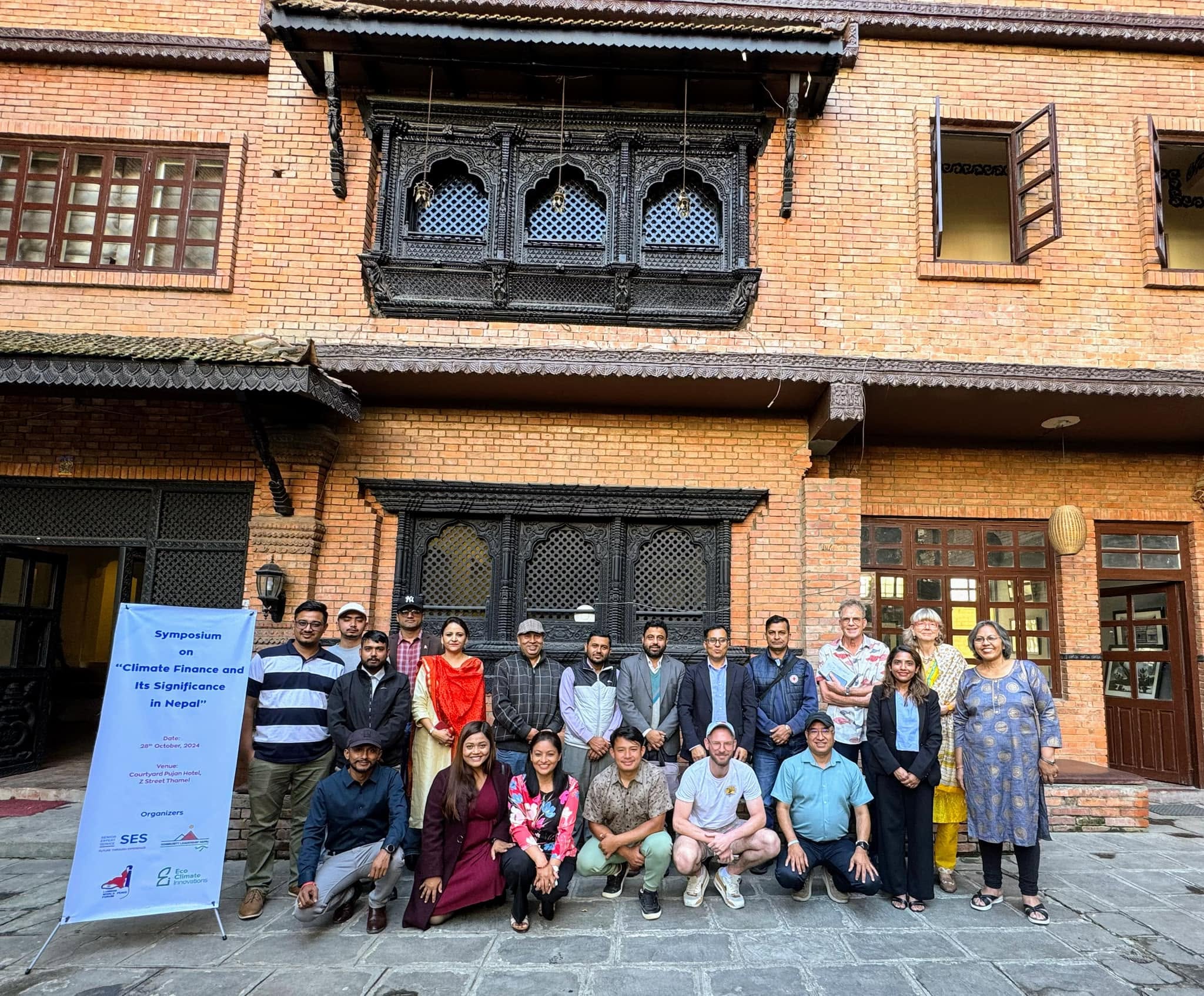

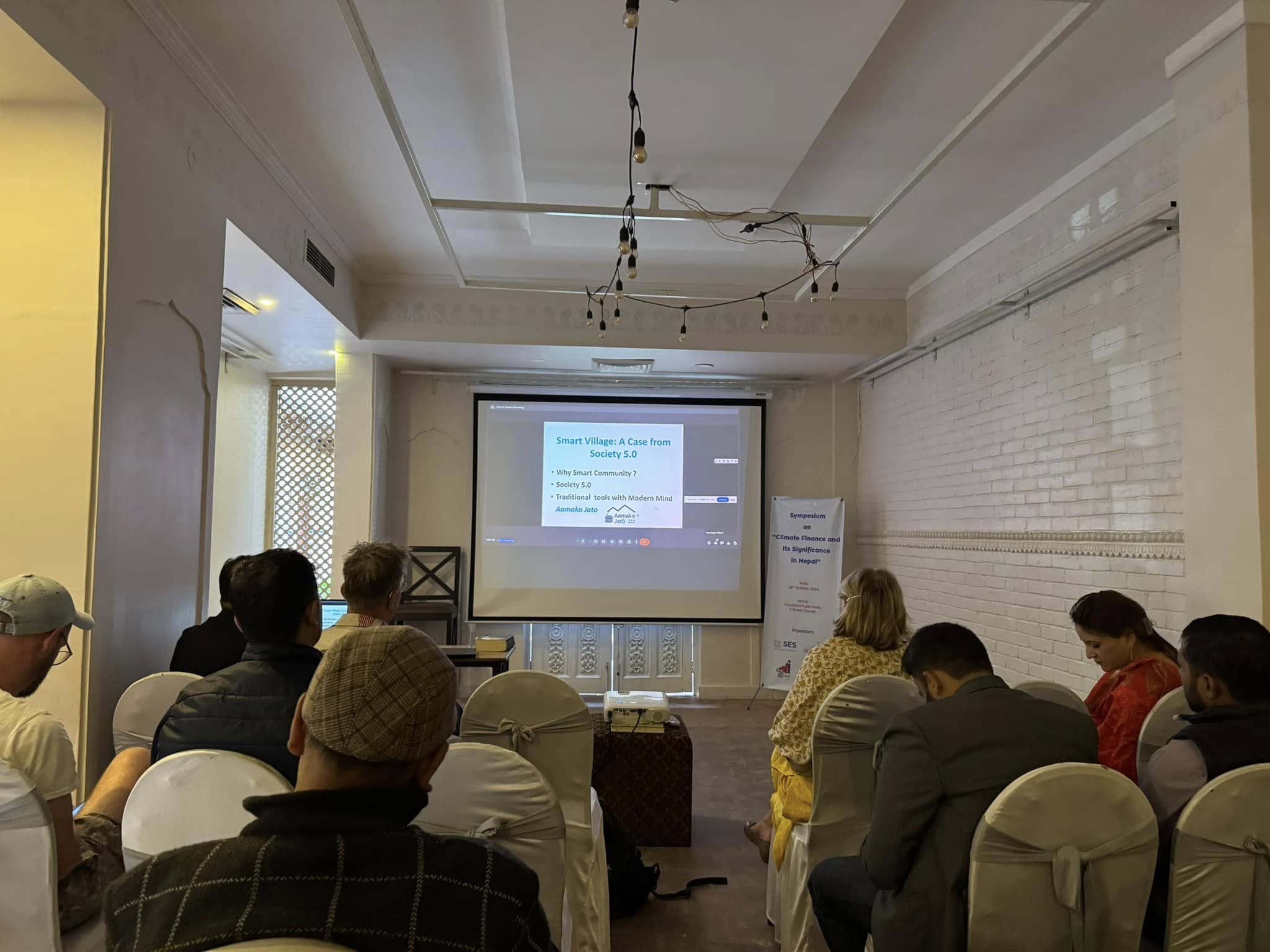
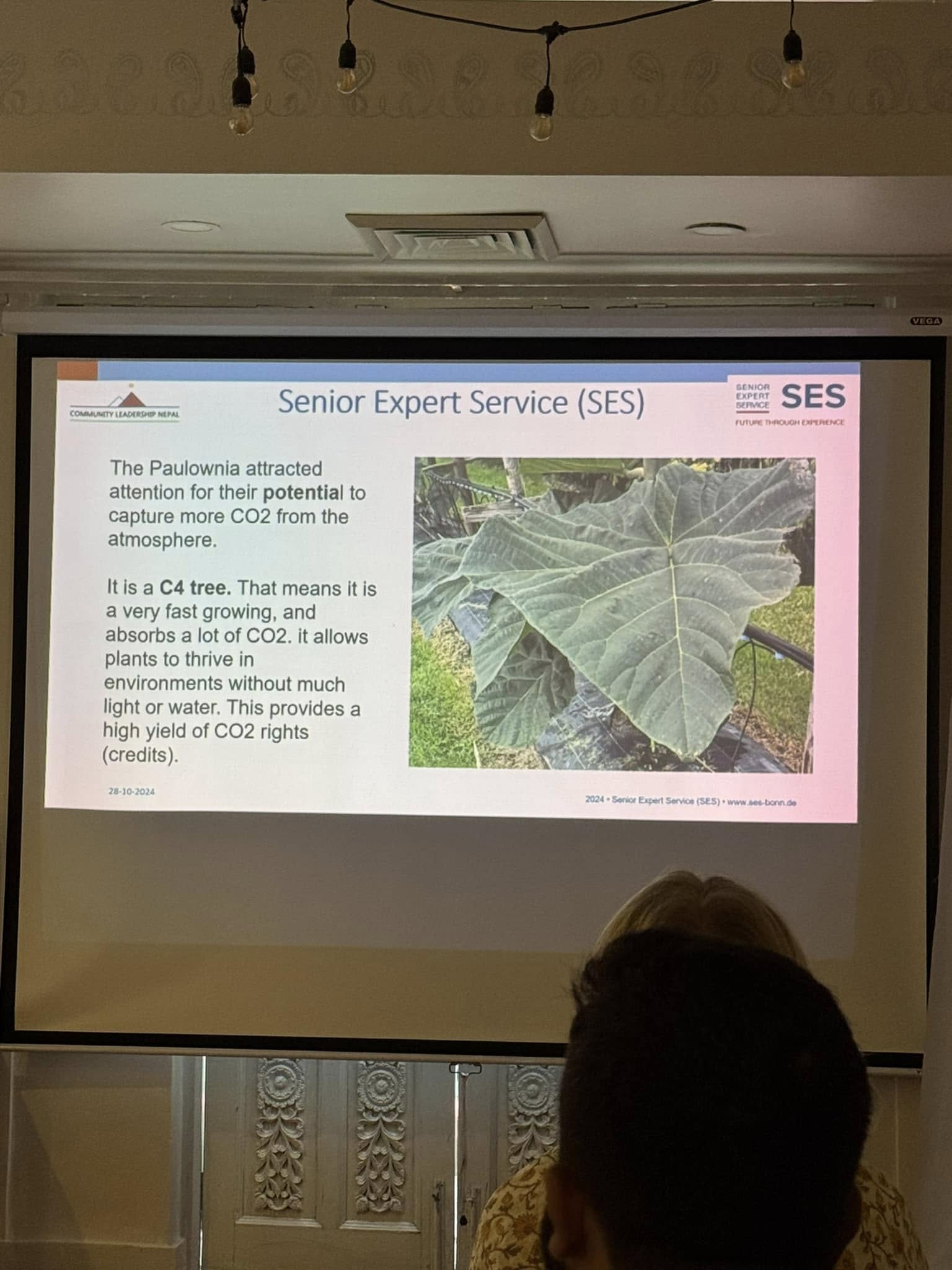
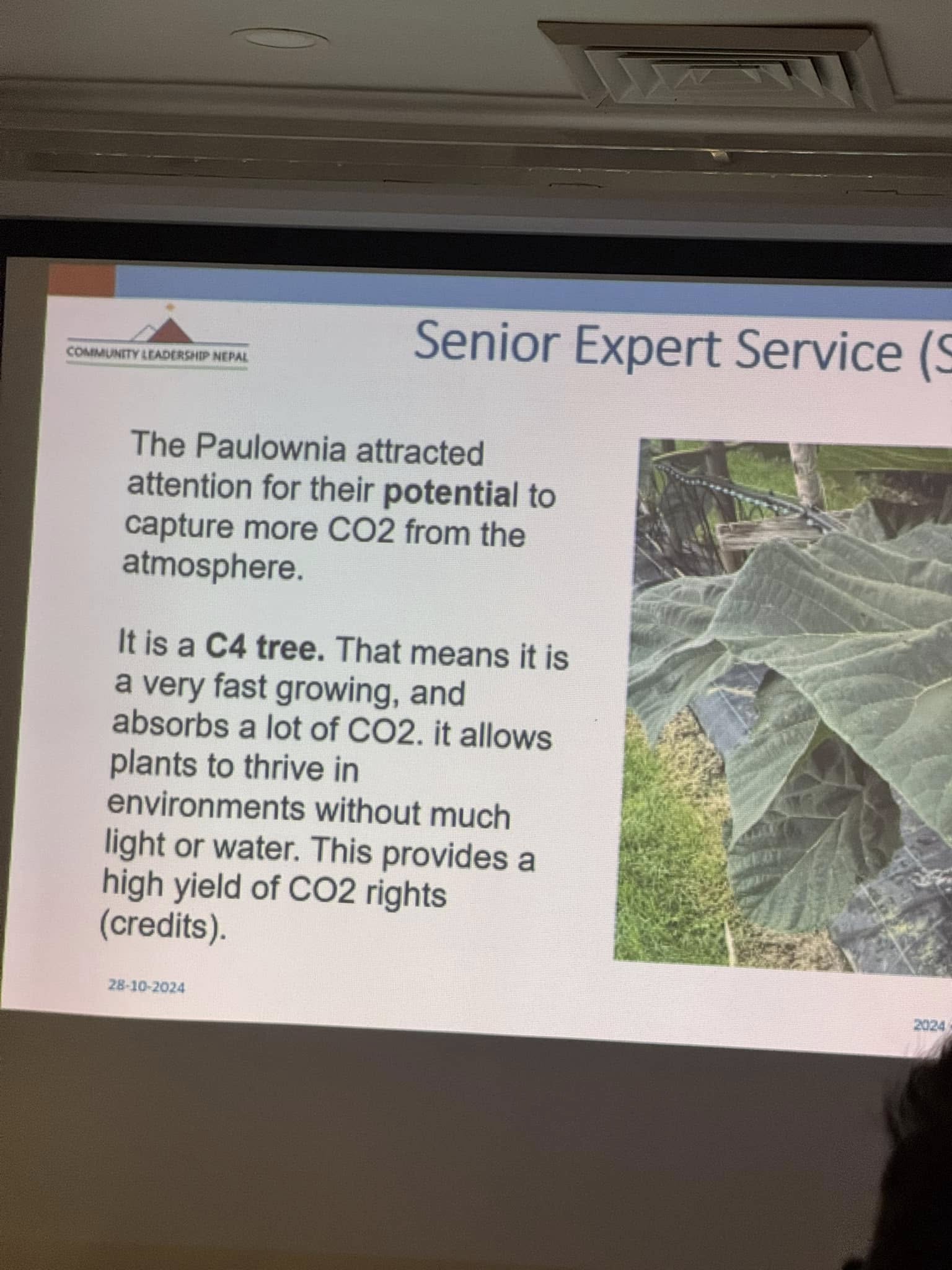
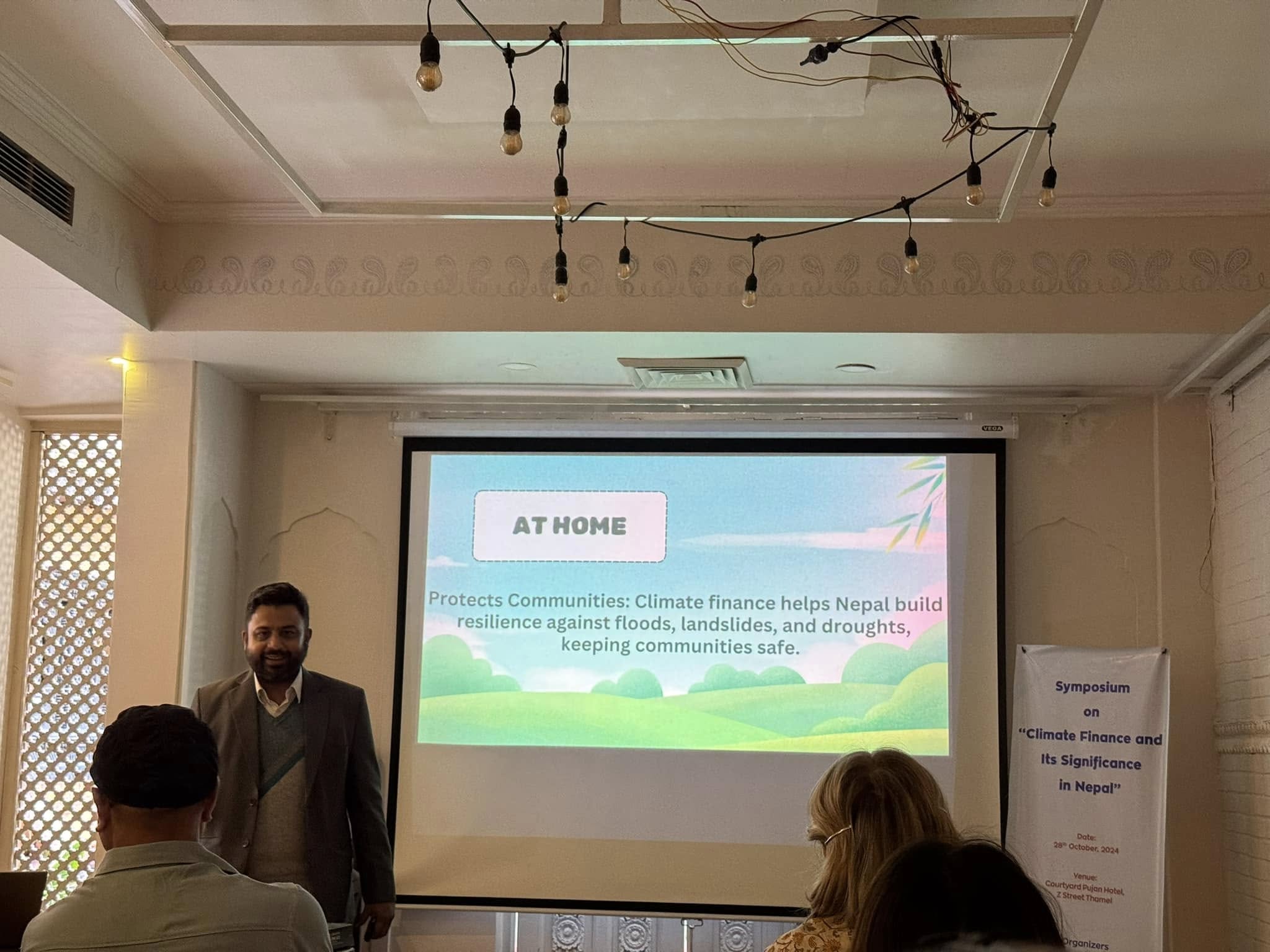
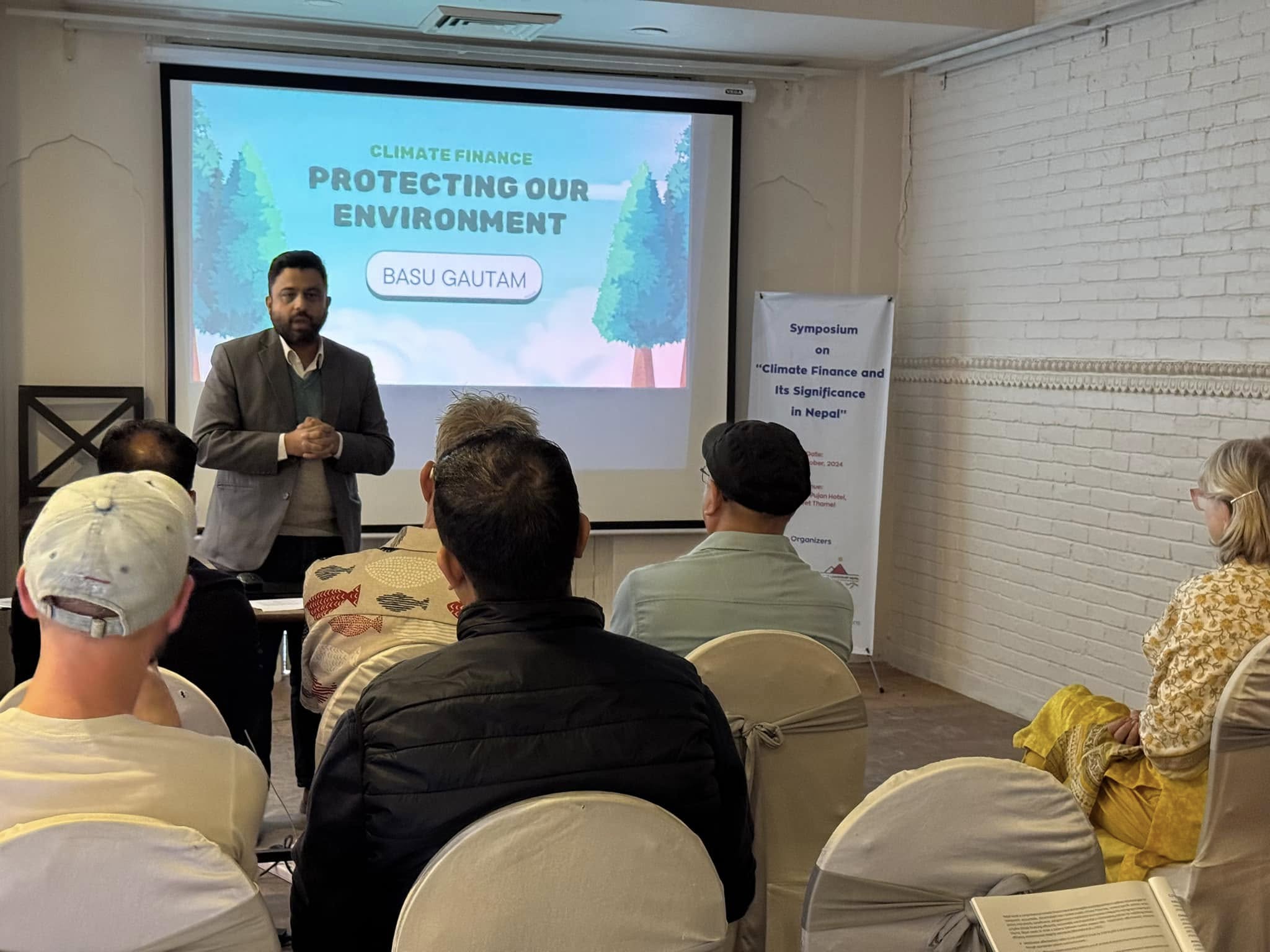
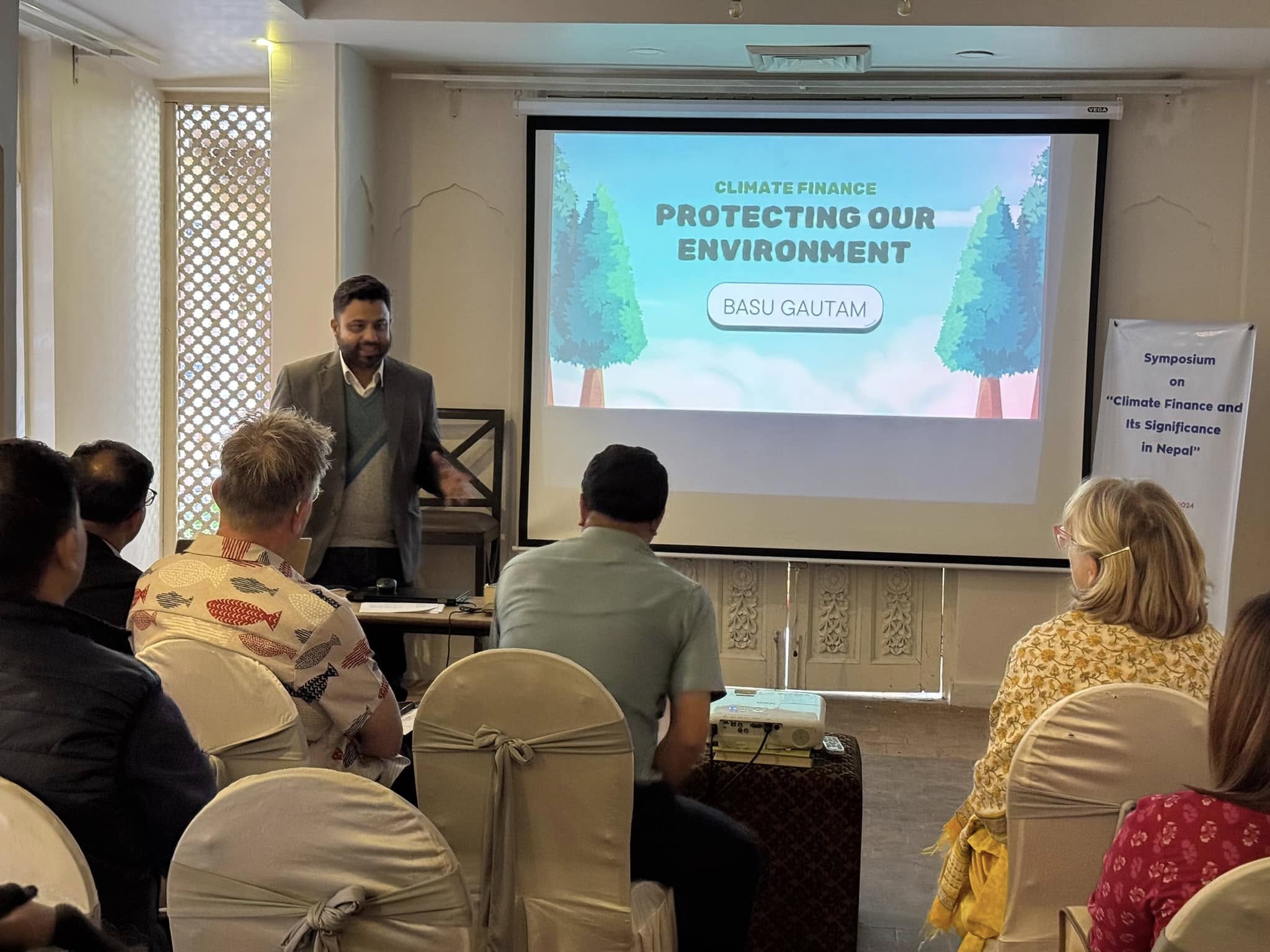
Symposium Gallery Source: Community Leadership Nepal Foundation
As I write this from Kathmandu, the numbers in our datasets are no longer just points on a map—they are shattered homes in Rasuwa, fractured families in Nuwakot, and an ancient mountain landscape breaking apart in real time. The Himalayas are the water towers of Asia, quietly sustaining over 1.4 billion lives downstream. We did not build our lives by burning the planet’s fossil fuels, and our communities must not be left to pay for the world’s industrial excess with their lives, their heritage, and their future. If climate justice means anything, it is time for the world’s largest emitters to step up, take accountability, and fund the survival of the Hindu Kush–Himalaya–Karakoram (HKHK) and Tibetan Plateau region.
Notice: To avoid fraud and ensure resources reach affected communities directly, contributions should be routed exclusively through official Government of Nepal Prime Minister Disaster Relief Fund channels.