
Thursday, August 13, 2026
Home Data Visualization What is Data Visualization ?

What is Data Visualization ?

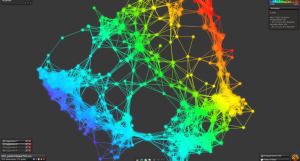
Data visualization describes the presentation of abstract information in graphical form. Data visualization allows us to spot patterns, trends, and correlations that otherwise might go unnoticed in traditional reports, tables, or spreadsheets.

Studies show that humans respond to visuals better than any other type of stimuli. The human brain processes visual information 60,000 times faster than text. In fact, visual data accounts for 90 percent of the information transmitted to the brain.

Today’s businesses have access to a vast amount of data generated from both inside and outside the organization. Data visualization helps you make sense of it all. It enables you to look at data differently to discover new answers and insights by:

  • Tell a Visual Data Story
    Go beyond simply presenting numbers and facts. Capture insights as visual stories. Build narratives around your data so that its relevance is clearly communicated and easy to understand.
  • Recognize the Signals from the Noise
    A picture really is worth a thousand words. A single graph conveys complex issues far more clearly—and enables users to identify outliers and anomalies much faster.
  • Master a Growing Volume of Data
    The digital universe is expected to double in size every two years. But you don’t have to be overwhelmed. By transforming data into simple visuals, it becomes more meaningful to decision-makers. Visual interaction with large datasets simplifies the analytic process, revealing new business insights that can be turned into a competitive advantage.
datasagarhttp://www.DataSagar.com
Sagar is multidisciplinary technologist, educator, and entrepreneur based in Nepal. As the founder of Illionso Technologies and Kashi Garden Resort, he operates at the intersection of web architecture, data intelligence, innovation, and digital transformation. From building digital solutions to scaling real-world concepts, his mission is to share knowledge alongside merge emerging as well as disruptive technologies with transformative offline experiences.
RELATED ARTICLES

Why Linux Won the Infrastructure War? Lessons from Linus Torvalds

In 1991, 21-year-old Linus Torvalds announced a "hobby" operating system. Today, Linux powers supercomputers, cloud servers, and Android. Explore his journey, the open-source economy, and the lessons for modern developers.

What Is Vibe Coding? A Complete Beginner’s Guide to Building Software and Web Pages With AI

A few years ago, building a website meant sitting down with a programming book, picking a language, and slowly working through syntax...

What is Answer Engine Optimization (AEO)? Getting Ready for AI Powered Search and Agentic Era Digital Marketing

Search is changing faster than it has in the last two decades. For years, businesses focused on ranking their websites on search...

Most Popular

Why Linux Won the Infrastructure War? Lessons from Linus Torvalds

In 1991, 21-year-old Linus Torvalds announced a "hobby" operating system. Today, Linux powers supercomputers, cloud servers, and Android. Explore his journey, the open-source economy, and the lessons for modern developers.

What Is Vibe Coding? A Complete Beginner’s Guide to Building Software and Web Pages With AI

A few years ago, building a website meant sitting down with a programming book, picking a language, and slowly working through syntax...

What is Answer Engine Optimization (AEO)? Getting Ready for AI Powered Search and Agentic Era Digital Marketing

Search is changing faster than it has in the last two decades. For years, businesses focused on ranking their websites on search...

The Plain Text Web: Why llms.txt Is Becoming the New Site Standard

The web built today is heavy. Between client-side JavaScript, cookie banners, tracker scripts, and responsive CSS grids, a typical webpage carries megabytes...